
With the rise of AI and the limited time scientists have, I thought I would test the most famous AI tools for you.
My goal is to share how far the AI revolution has come and, of course, which tools make sense for you to use.
The tools provided here do not need any advanced coding skills and generally have a free version.
Here is what I found – and at times, it truly surprised me:
Top Picks
Our top picks: the best free AI tools to use in 2026:
Noah AI
An AI research assistant for literature discovery and exploration. It helps you find relevant papers, extract key insights, and plan your own experimental strategy.
Julius AI
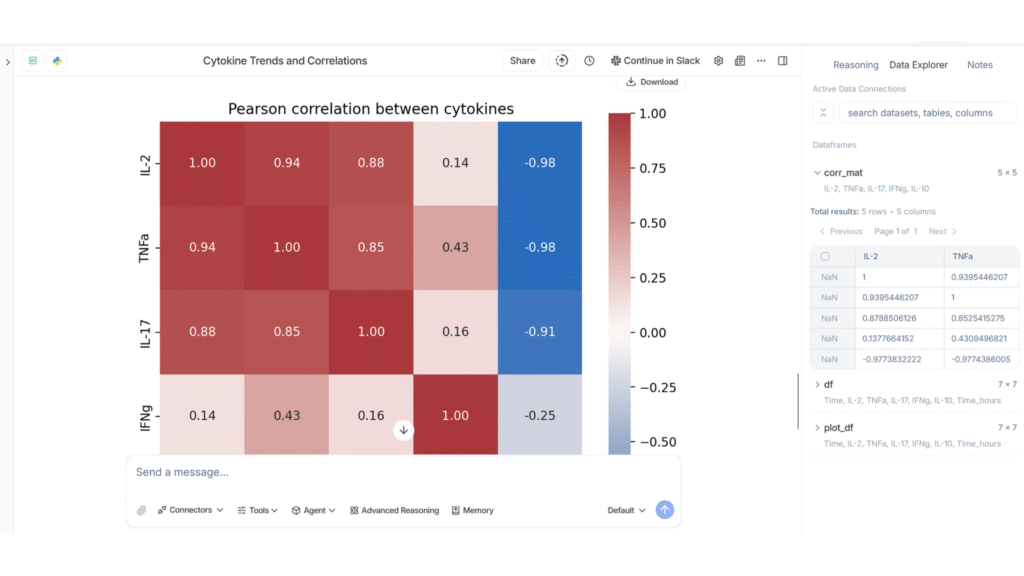
An AI for data analysis and visualization. You can upload datasets, ask questions in written form, and generate statistics, graphs, and insights without coding.
SciSpace
An AI tool for reading and understanding scientific papers, although it also offers several agentic work modes that allow you to perform a number of other tasks.
Still The Secret Winner: ChatGPT
ChatGPT 5.2, with its advanced reasoning, is one of the best-performing AIs – across all functionalities. In other words, every other specialized AI tool had only marginal advantages.
Although it provides less user guidance, it offers the greatest flexibility given that it works with written prompts.
That means if you only want to use a single tool, this is it.
Literature Review and Paper Discovery Tools
Literature review tools are designed to help researchers quickly find, filter, and understand scientific papers. They search large academic databases, summarize key findings, and highlight relevant studies. These tools are especially useful for early-stage research, systematic reviews, and exploring unfamiliar topics.
When to use: Amazing functionality that can save hours of work. Furthermore, it can unearth papers that would stay hidden through normal Google searches.
Main limitations: One cannot be sure whether a search was exhaustive. Moreover, caveats such as differences in the interpretation of results or methods made by humans cannot be corrected by AI. Therefore, a literature search can only be as robust as the underlying science.
Elicit (Ought)
Based on written prompts, Elicit allows for the creation of literature reports, finding of papers, or using “paper chats” to explore single publications. It can present information in different formats, including text summaries and tables, which makes it easier to compare studies quickly.
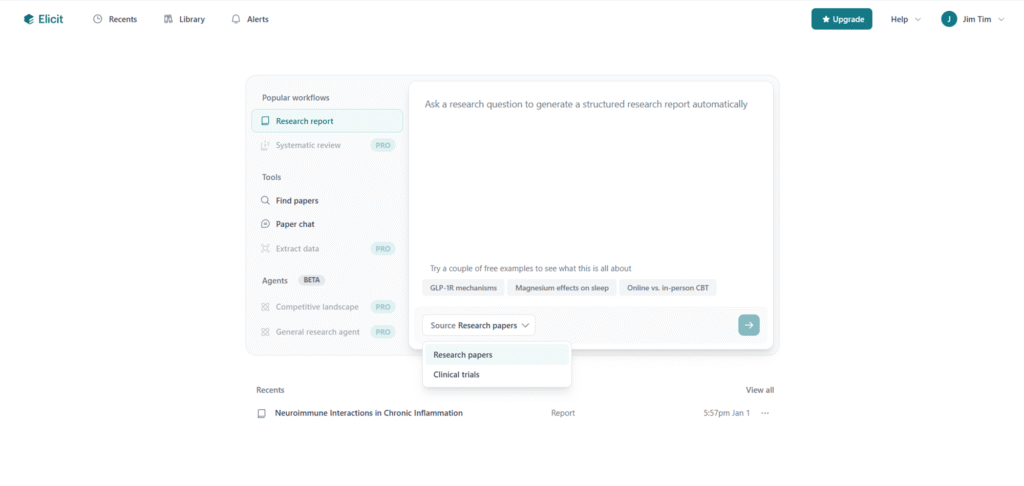
One useful feature is its ability to refine vague or poorly phrased prompts for higher efficiency.
However, it’s not always clear how comprehensive the search results are – whether there would potentially be more papers that simply weren’t caught or analyzed.
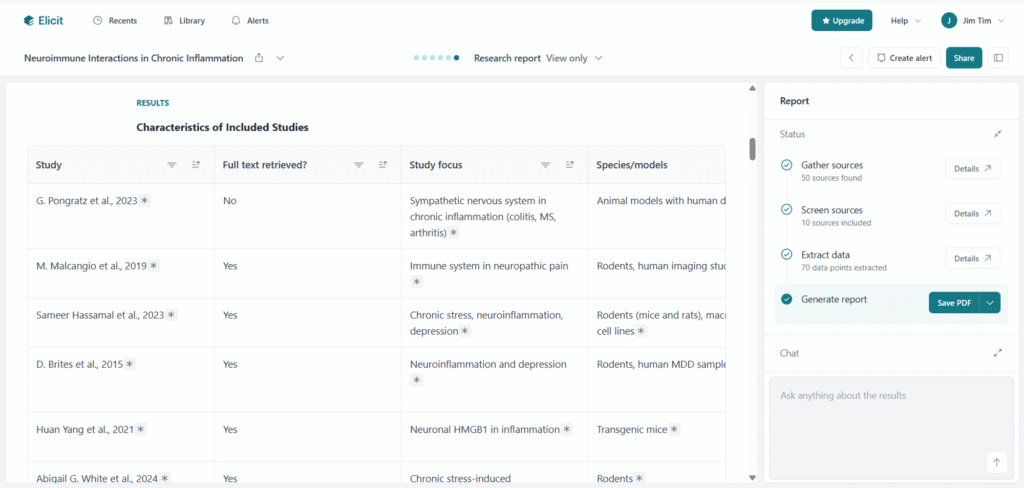
When searching for less-researched topics, even with filters like “animal studies only,” the tool often returned many irrelevant papers, despite being labeled as irrelevant.
SciSpace
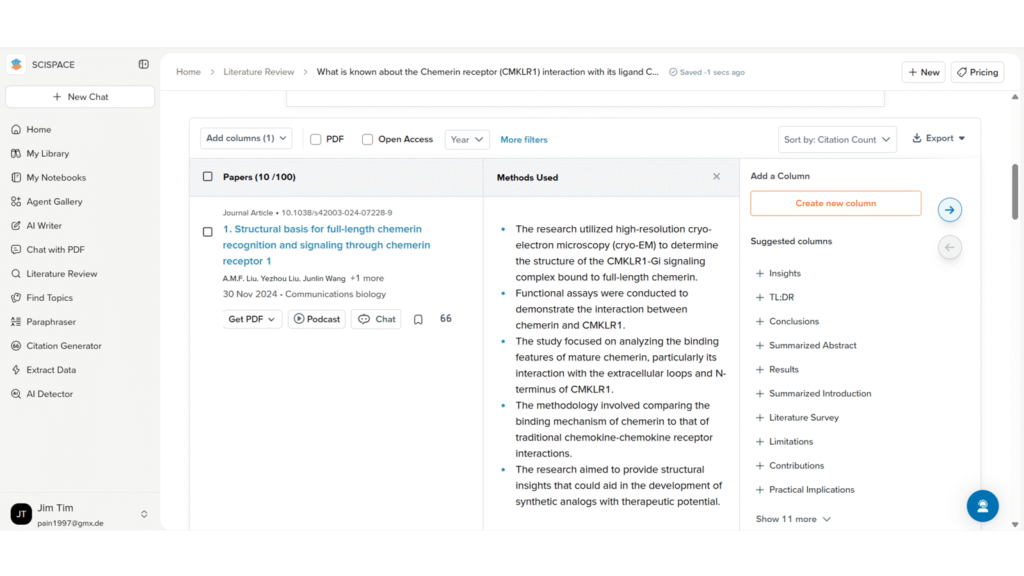
SciSpace’s deep research mode can retrieve a large number of papers and assign relevance scores. The ability to manually browse through all of them is helpful for more systematic reviews.
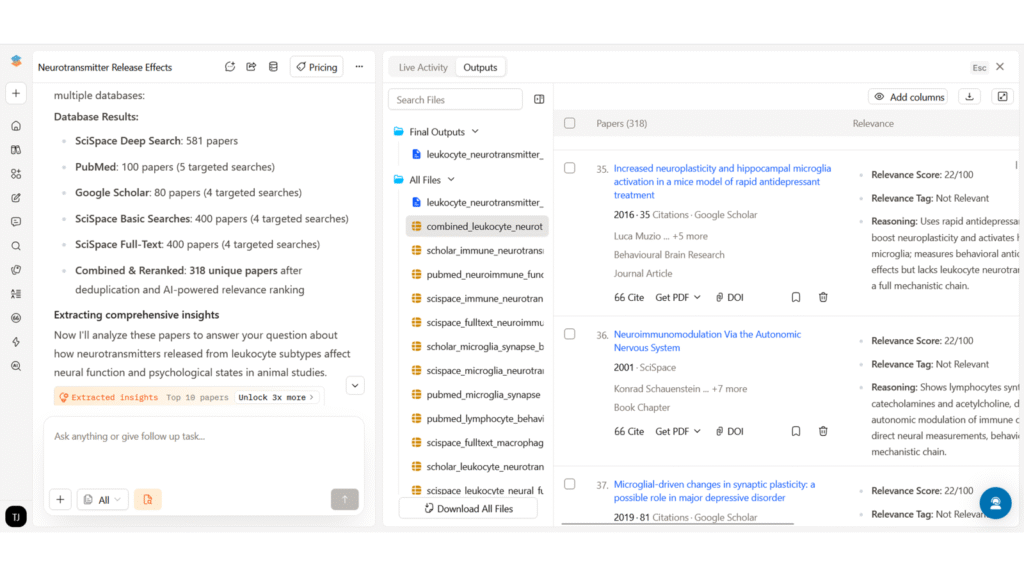
Moreover, the information is displayed in well-structured and interactive tables.
The main drawback is that free credits are used up quickly. Also, when attempting complex tasks, such as creating a detailed PowerPoint presentation, the system can overload and fail to complete the task, making it frustrating to use for larger projects.
Of note:
SciSpace offers several functions beyond basic literature search, such as graph design or text generation.
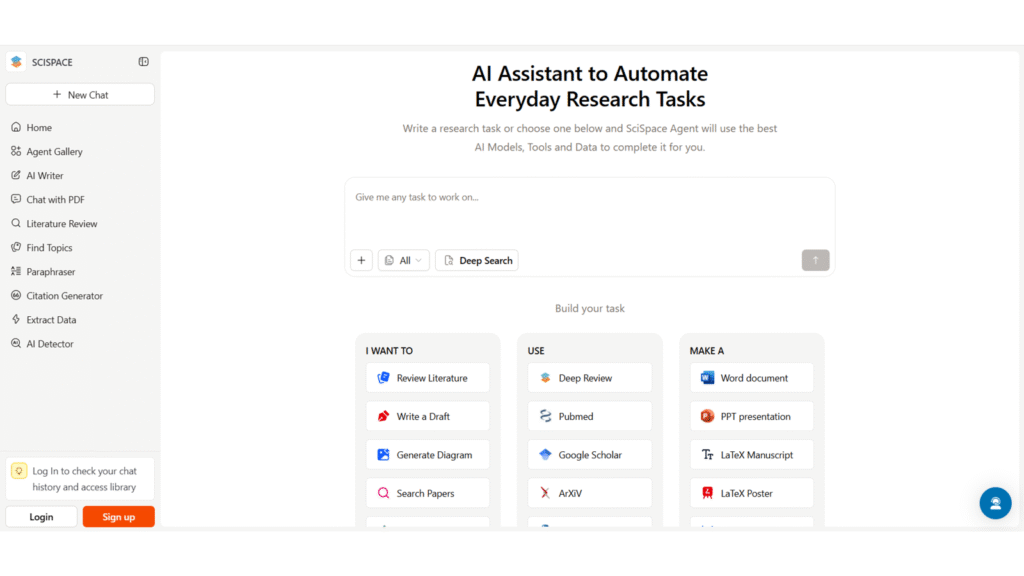
However, the limited credits remain a limitation, and its functionality in these areas didn’t seem superior to other tools. Still, its real-time suggestions to improve prompts, especially when switching between different features such as search, writing, and presentation tools, can be very helpful and time-saving.
Consensus
Consensus works similarly to Elicit or SciSpace by searching academic papers and summarizing answers.
Its main advantage is that it offers several useful filters that help narrow down results.
However, it is far from exhaustive. The Pro version is limited to 100 papers, which makes it unsuitable for large-scale literature reviews.
Research Rabbit
Research Rabbit focuses on finding similar and citing articles. It visualizes connections between papers in a network-style map, which can be helpful for exploring how research topics are linked, which papers influenced others, and which studies are closely related.
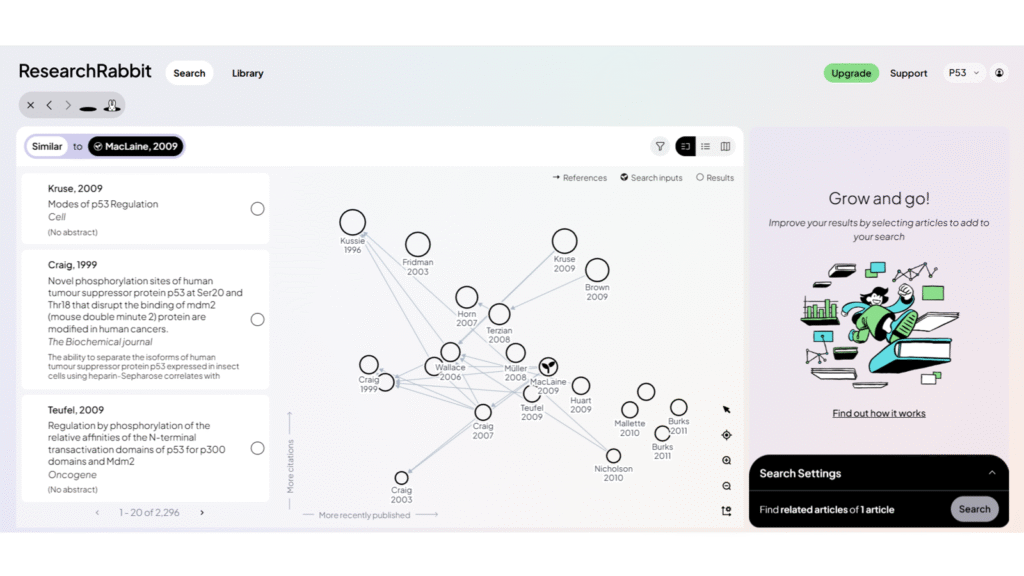
In theory, this can be helpful for identifying key papers in a field and understanding how ideas have developed over time.
In practice, however, the search function does not always work very well. Even when the tool indicates that thousands of similar papers exist, it only shows a small number of them.
Connected Papers
Very similar to Research Rabbit, Connected Papers shows related research articles in a visually appealing connection map based on the Semantic Scholar database.
It is quick and easy to use, and the visual layout helps users understand how studies are linked.
However, some papers found by the search engine are not included in the map, and for broad topics, the retrieval is still suboptimal.
Scite
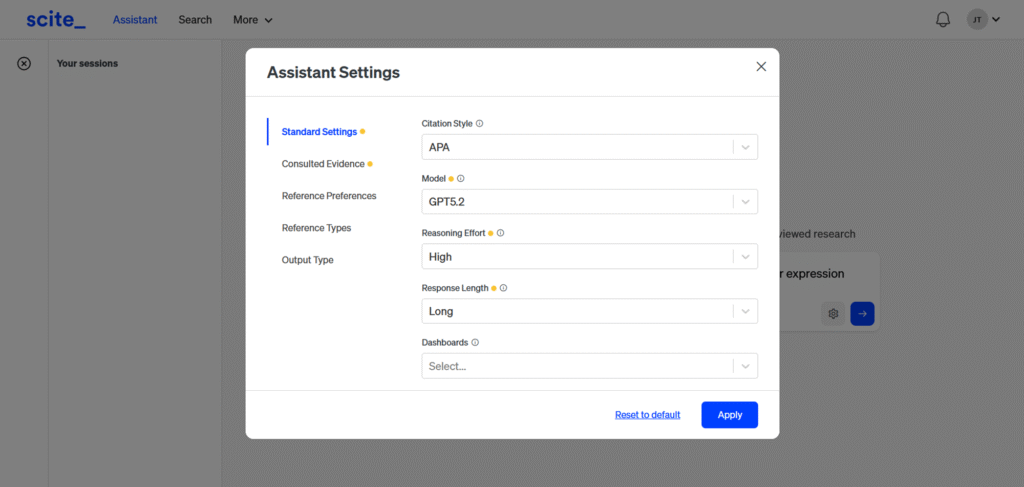
Scite provides standard literature search functionality and shows how papers are cited in context. Compared to ChatGPT alone, it tends to stay more focused on the specific question being asked.
However, it is not very exhaustive, and its scope is narrower. While it avoids overly broad answers, it also misses a lot of potentially relevant literature.
Personal Tip: AI-generated literature summaries will reflect the biases (e.g., overinterpretation of data), ambiguities arising from imprecise definitions (such as what qualifies as chronic stress), contextual dependencies (for example, statistical significance versus biological relevance), and even the errors present in the original papers themselves. Apparent coherence or authority, whether in the literature or in AI-generated outputs, does not guarantee completeness or accuracy.
Therefore, reviewing your prompt strategy (e.g., what is “short term?) as well as vigilance is important. It is easy to get mislead when a summary is based on a single (or a few) studies and miss an important factor, such as an alternative receptor, a splicing variant, or an environmental variable that is simply not mentioned.
AI Research Assistants and Scientific Reasoning Tools
While these two tools are able to conduct literature searches, instead of providing an overview, they are more focused on finding answers to specific inquiries, explaining scientific concepts, and discussing limitations or experimental design. They are strong at reasoning through complex questions in clear language and can provide context that goes beyond simple paper summaries.
When to use: You want feedback or need specific literature for an experimental approach. These tools help you find anything from antagonists to appropriate time points.
Main limitations: You have to double-check – although their output is often precise, it might stem from a paper with a different scope or experimental setup. Moreover, don’t give in to the perception that conducting the experiment will be easy or come without surprises.
Noah AI
Noah AI performs very well for scientific questions, even when they are nuanced. It provides clear text explanations, tables, highlighted limitations, and even practical details such as concentration ranges, statistical considerations, and appropriate cell seeding densities.
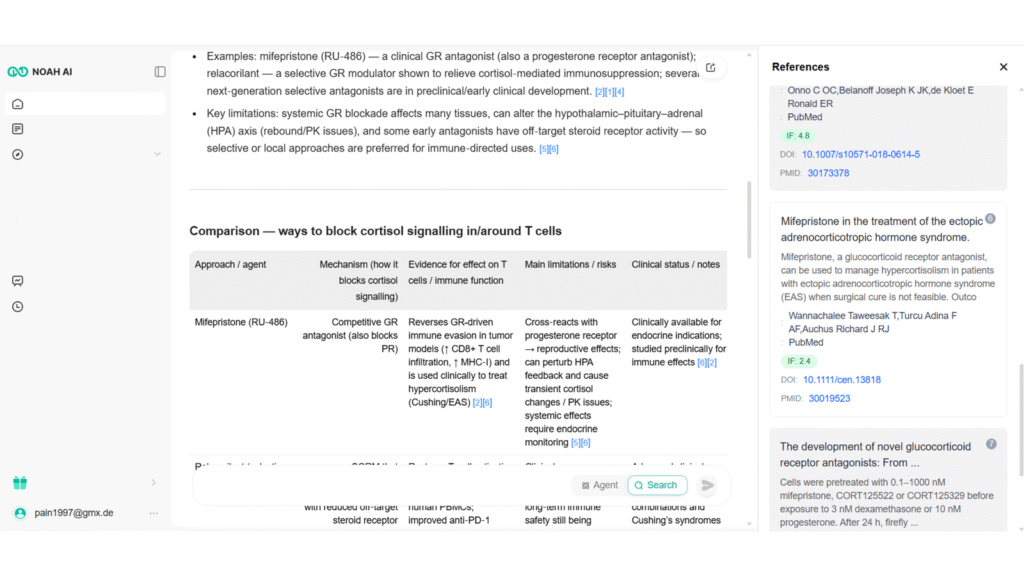
It also allows for long, detailed research outputs with a high token limit, which makes it useful for in-depth scientific exploration.
The main weakness is the unstable interface, which hides labels on the main screen, requiring “experimental clicking” if one wants to use other tabs or additional functionalities. Hopefully, this will be a quick fix for the web designers.
ChatGPT
In essence, ChatGPT can help you calculate statistics, create a research plan or find relevant paper.
Overall, ChatGPT performs well in terms of reasoning and explaining complex topics in a structured way. It is also good at discussing limitations and caveats.
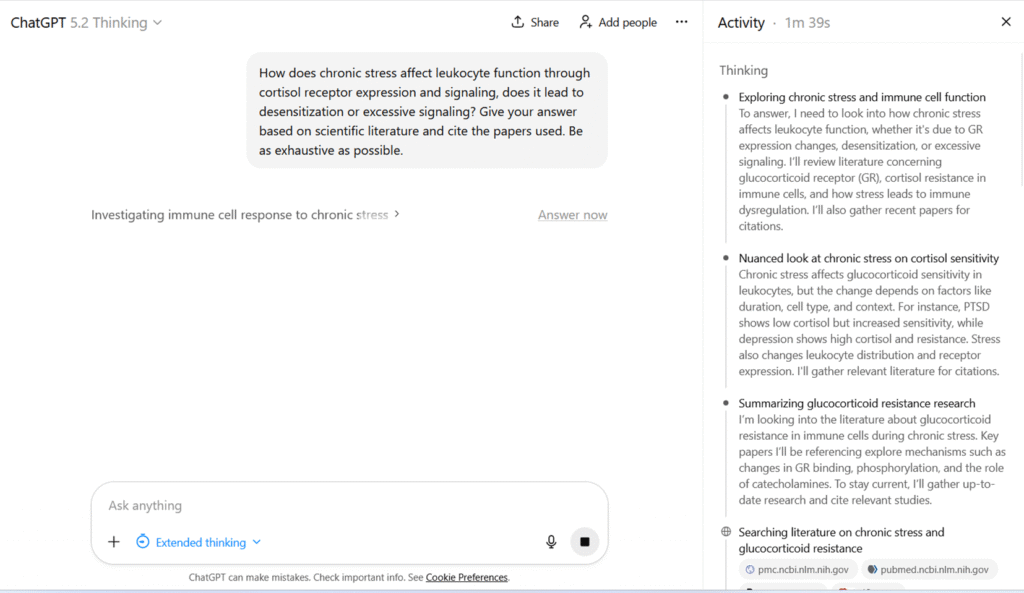
While other tools are specifically trained, ChatGPT sometimes has to be re-prompted to obtain additional or more nuanced information.
However, it is not exhaustive in its literature coverage. Moreover, sometimes a different prompting strategy or starting a new chat is necessary to avoid stereotypical answers.
Data Exploration and Visualization Tools
Data exploration, visualization, and design tools support you in turning data and ideas into clear visual outputs. Additionally, they can help you explore datasets, quickly generate graphs, and receive basic explanations of trends, including significance tests or suggestions for suitable visual formats.
When to use: They are fantastic for beginners – they allow you to get a fast overview of unfamiliar data, find trends, and draft visualizations. Especially for those who do not have a knack for statistics, they can be extremely helpful.
Main Limitations: Large datasets with nuances will still require human judgment. Moreover, designed graphs are rarely publication-ready – at best, you can use them for presentations or quick communications. Take care not to share sensitive information or unpublished work, as data may be processed and stored on external servers.
Julius AI
Julius AI is particularly good for basic data exploration. It quickly provides insights into data interpretation, clear text explanations, and generates graphs.
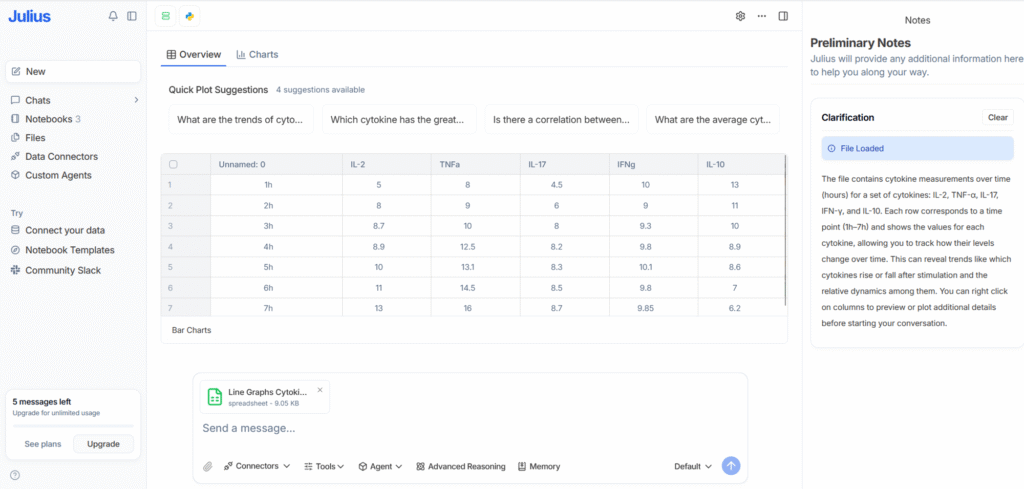
Along with correctly identifying statistical nuances and appropriate tests, it can really lay the foundation for data analysis. It also suggests visually appropriate bar chart designs, which helps avoid misleading visualizations.
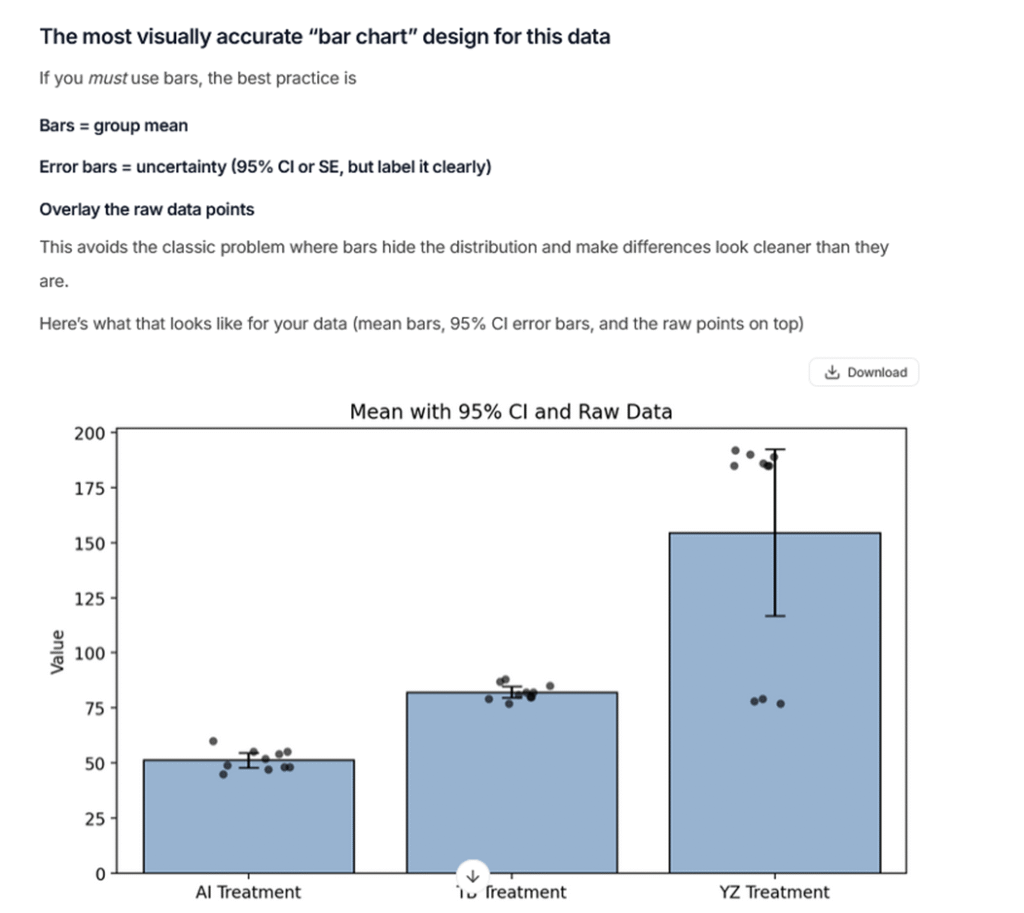
While it can modify graphs upon request, for publication-ready designs you will still want to use statistical software.
Napkin AI
Napkin AI is well suited for creating diagrams and creative visual content that can be used in presentations, posters, blogs, or internal communications.
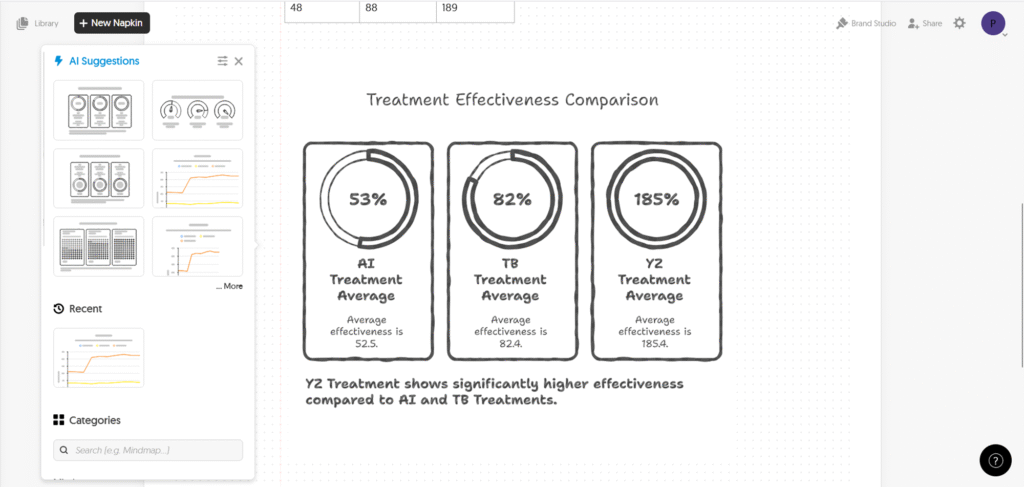
While you can draw charts or upload your data, it does not analyze data and is not designed for statistical or scientific work.
Graphy
Graphy is mainly a design-focused tool for creating modern-looking charts. While the visuals are appealing, it does not provide meaningful data analysis, and the AI features are not very robust.
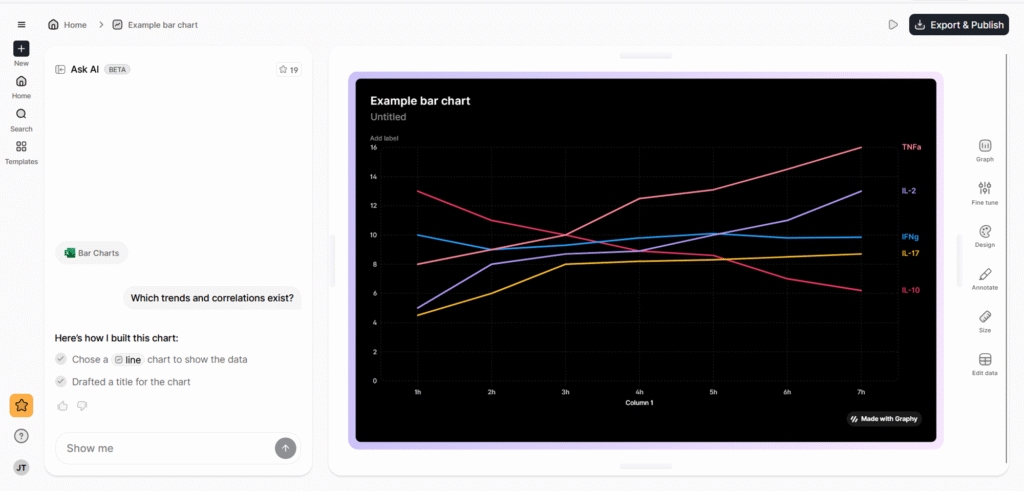
It is better suited for presentation design than for scientific interpretation.
Datawrapper
Datawrapper is useful for quick data visualizations. It does not include advanced AI features, but its simplicity makes it fast and easy to use.
The downside is that customization options are limited.
Grammar and Writing Tools
Writing-focused tools aim to improve language quality, correct grammar, and sometimes rephrase content. They are mainly useful for polishing manuscripts or refining notes. Some offer functionality to formulate text from bullet points, check for AI-generated content, or detect plagiarism.
When to use: Generally, grammar correction tools are very useful for science students and non-native English speakers. These tools only seem useful if you want a quick add-in for Word; otherwise, use ChatGPT.
Main Limitations: Overall, functionality and performance are rather disappointing. In almost all cases, ChatGPT performs better. Take care not to share sensitive information or unpublished work, as data may be processed and stored on external servers.
Paperpal
In terms of performance, it works reasonably well for grammar correction, but doesn’t offer any convincing functionalities other LLMs couldn’t perform.
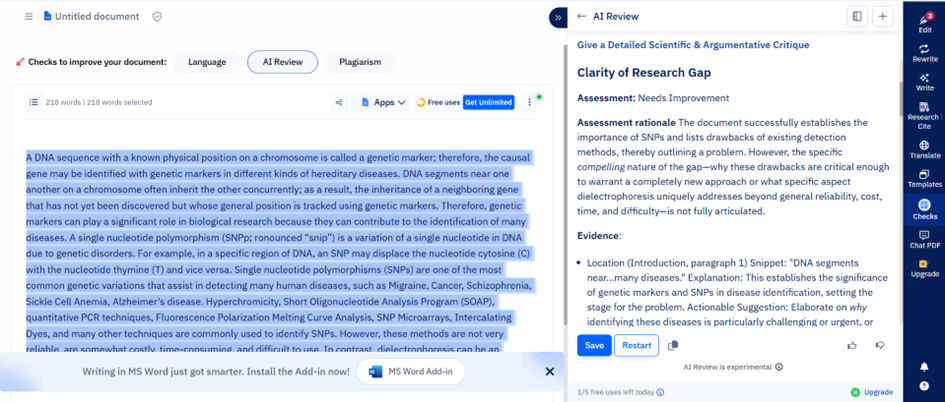
Writefull
While it can save time because it is integrated into Word, its features are rigid, and functions like the title generator perform limited and sometimes poorly.
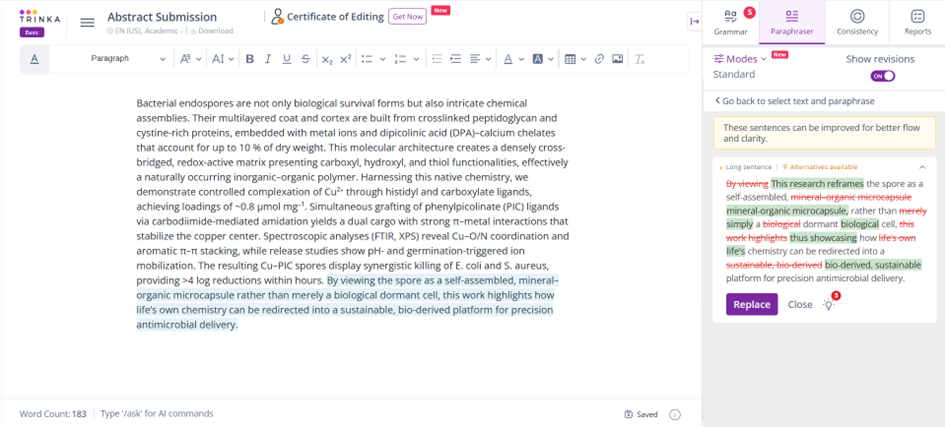
Trinka AI (by Enago)
Its specialized grammar tools perform relatively well. The journal finder, while an interesting feature, is very limited, and overall functionality is quite narrow.
Tools for Specific Analysis Use-Cases
The following tools are not mere add-ins or online software interfaces; they require some amount of coding or extra effort to run locally. However, they demonstrate that for specific use cases, AI tools can make analyses much faster and more functional.
Ilastik
An easy-to-use tool for image analysis that employs machine learning for tasks such as cell segmentation and classification.
AlphaFold
Yes, we finally caught up to AlphaFold! It became famous for accurately predicting a protein’s 3D structure from its amino acid sequence.
DeepLabCut
An open-source tool that uses deep neural networks for markerless motion tracking of animals in videos.

BioNeMo (NVIDIA)
A cloud platform offering pre-trained generative AI models for biology and chemistry.
Google DeepVariant
A genomics AI tool from Google that uses deep learning to call genetic variants from DNA sequencing data. DeepVariant treats sequencing reads like images and classifies sites as variant or reference, often achieving higher accuracy than traditional algorithms.
Large Language Models
There are also several large language models trained specifically on biomedical literature (e.g., PubMed abstracts and papers). For example, BioGPT is designed to answer biomedical questions and generate text in a scholarly style. However, these models often need to be run locally or integrated into Python workflows.
Grant Writing Tools
Of course, there are also grant-writing AI tools available. While most of the writing is still up to you, tools like Grantable or Grant Review AI can help you write more efficiently or, in the latter case, provide feedback that is similar to real grant reviews.
ASCEND by BenchSci
Offers antibody search for academic scientists and pharma target verification and research for enterprises.
Enterprise Solutions for Companies and Large Scale
For those of you who work in companies, plan a spin-off, or have larger capacities, there are several AI options available (only) to enterprises. Obviously, these come with a price tag, but they often include personal support and more advanced models.
BioLM
Used for molecular lead optimization. It provides custom AI workflows, including model fine-tuning.
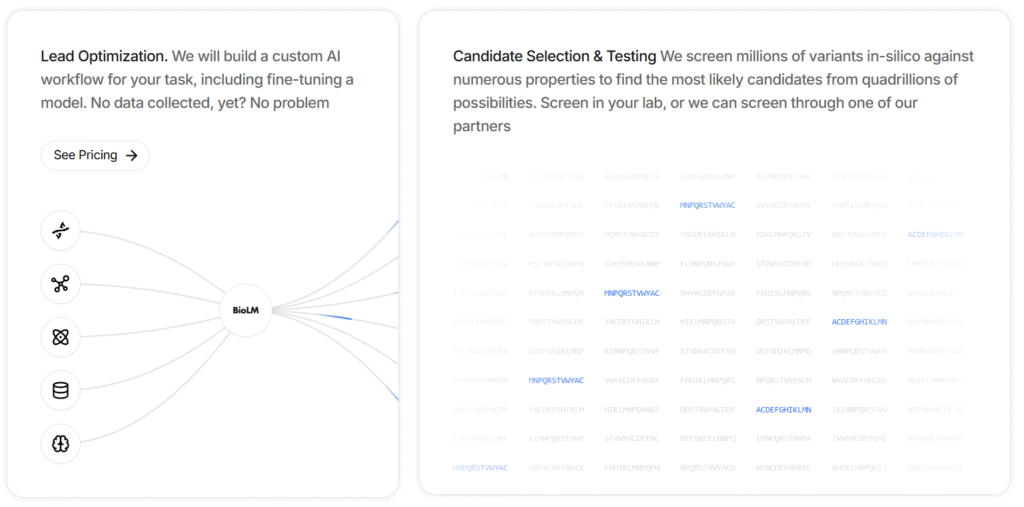
For example, it can screen millions of variants in silico against numerous properties to identify the most likely candidates from quadrillions of possibilities.
Aiforia
A cloud-based image analysis platform that uses AI (deep learning) to help pathologists and researchers analyze microscopy images (e.g., histology slides and tissue samples).
Synthace
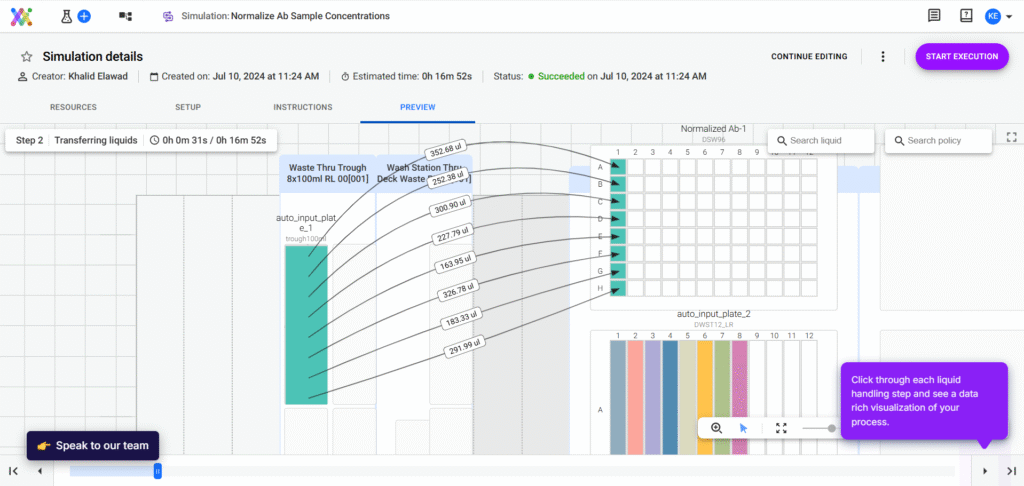
Allows you to design complex, robot-automated workflows yourself. It helps you keep an overview of complex processes, speed up and automate liquid volume calculations, and plan new workflows.
Causaly
A scientific literature search and compilation tool, similar to Elicit and others discussed earlier.
DataRobot AI Cloud
A platform for automated machine learning (AutoML) that can be applied to scientific datasets. DataRobot can ingest data (omics tables, clinical data, etc.), test many modeling approaches, and output the best predictive models without the user needing to code.
Precious3GPT
A transformer-based, multimodal AI model that integrates multi-omics data—including proteomics, RNA sequencing, and DNA methylation—across multiple species, tissues, and cell lines. It supports tasks such as aging research, disease modeling, drug discovery, and synthetic data generation. It can both synthesize and interpret complex biological data from diverse experimental settings.
And Many More
Of course, you will also find several solutions that combine or specialize in the functionalities of other tools. To name a few examples, Pandaomics BigRNA focuses on predicting detailed RNA regulation (such as splicing and polyadenylation).
Other companies offer AI solutions that help you process your data, such as IBM’s AI agents that integrate with your existing data and applications.
Final Word & Explanation
I hope this overview will prove useful to you.
I was truly surprised by the statistical accuracy and experimental design capabilities.
The literature review tools will certainly prove helpful, especially when starting a new topic or wanting to dive deeper into a hypothesis.
My biggest surprise, however, was the grammar and writing tools. I was genuinely concerned that they would pose a big temptation, especially for young scientists.
In reality, they proved to be far inferior to ChatGPT. In other words, while LLMs can truly enhance grammar and flow, the basic structure and content of a good article must still come from a human.
Part of the reason why some of the tools performed so poorly is that they simply leverage ChatGPT as an input. In other words, behind the buttons you click, they just forward a prompt to ChatGPT and print out its answer.
However, since these prompts are often general (not adapted to your specific use case) and sometimes use older ChatGPT versions, the output is simply poor.
Please also remember that I tested these tools with a limited number of prompts and tasks. If you use them, you will surely find other shortcomings or use cases.
Moreover, I used the free versions, as you probably will initially too. The paid versions often provide unlimited access, advanced setting options, and, especially for review tools, a larger number of studies included in reports.
Still, keep in mind that there are other tools out there that I couldn’t include here, and we continuously see new ones being added.
In my opinion, AI tools can already help you significantly with literature, analysis, and grammar tasks, but they remain just that: tools. No AI will do the work for you—whether it’s experiments, thinking, or writing.